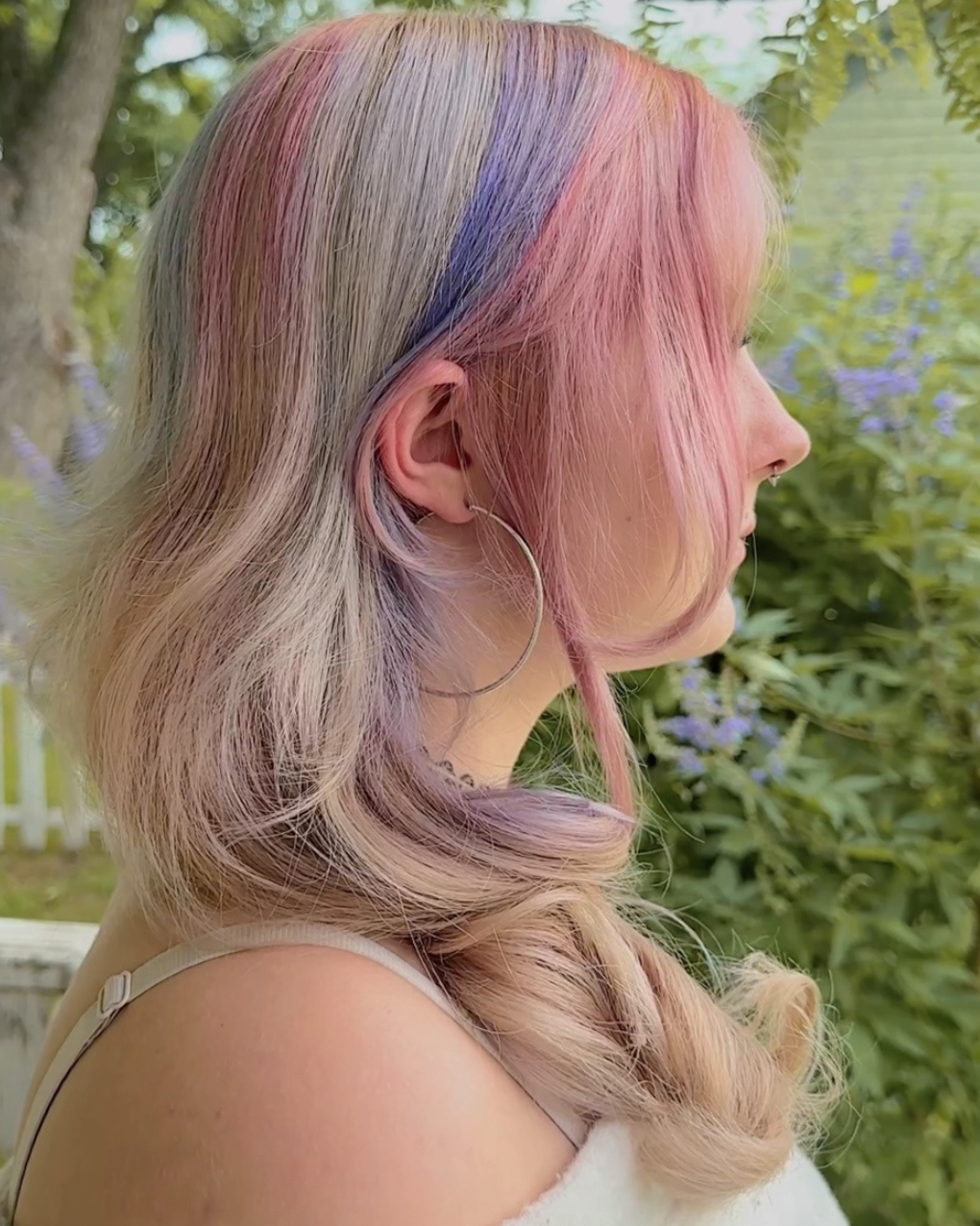
Pearl Pink and Lilac Color Blocking
Silver, rose and lilac tones come together in this pearlescent color-blocking look by creative color specialist Ashlyn Vernor (@angelringhair). Working on a prelightened Level 9 blonde, Ashlyn used strategic panel placement to keep each shade visible throughout the finished style while creating a soft, light-reflective finish.
Ashlyn used Pulp Riot Semi-Permanent Color in the shades Blush and Lilac and the new shades Silversmith and Molten Metal. “I chose Silversmith and Molten Metal because I had never tried them before, and I wanted to create something airy and soft to complement their pearlescent base,” she shares.
More about the shades:
- Silversmith: offers a cool-toned silver finish
- Molten Metal: features a metallic rose-gold base with blue undertones
“I added a little bit of Blush to Molten Metal to help the color palette be more cohesive, and Lilac just fit in so perfectly with the color scheme that I couldn’t leave it out.” Despite their soft pastel finish, the Precious Metals shades last up to 25 washes. Across the broader Pulp Riot Semi-Permanent Color line, anti-overworking formulas provide color that lasts up to 50 washes.
Advertisement

For the sectioning, she used symmetrical chunky panels through the front before transitioning into a pinwheel pattern through the back. Larger sections helped each tone remain distinct, allowing the silver, pink and violet shades to stand out when the hair was pinned up and styled.
Below, Ashlyn shares her formulas, placement breakdown and go-to tips for preventing color bleeding.
Color Consultation Checklist

Join BehindTheChair
Access the industry’s #1 source for hair trends, education and community now.
Products Used
Formulas
Steps
1. Start with a clean, neutral blonde canvas. Ashlyn’s client was prelightened and keeps up with her roots regularly. "She came in at a Level 9 neutral blonde. She is a natural Level 7."
2. Create the sectioning pattern: "I did a symmetrical chunky highlight in the front, transitioning to a pinwheel pattern in the back. I like to keep my sections anywhere from 1/2 inch to 1 inch. In this case, I chose to go chunkier so that the colors would pop when I pinned it up later,” says Ashlyn.
3. Apply Formula A through the face frame. Part a 1-inch section at the hairline, then continue the placement symmetrically on both sides of the head.
"My favorite tip is to split your chunky highlight like a book first, fully saturate the middle of the section and then saturate the outsides to decrease any staining on the other section,” Ashlyn says.
She then places pieces of cotton on each side. "I prefer cotton because when you put it over the color, it will stick to it and not slip like foil does! I love to use cotton to separate my chunky highlight sectioning so my colors do not bleed onto each other."
4. Apply Formula B through the Mohawk section and parietal ridge. Section out a 1-inch Mohawk panel and continue along the parietal ridge, ending behind the ears. Use the same saturation technique.
5. Using the apex as your guide, divide the pinwheel into three evenly spaced sections. Apply Formula C to the right section, Formula D to the middle section and Formula E to the left section.
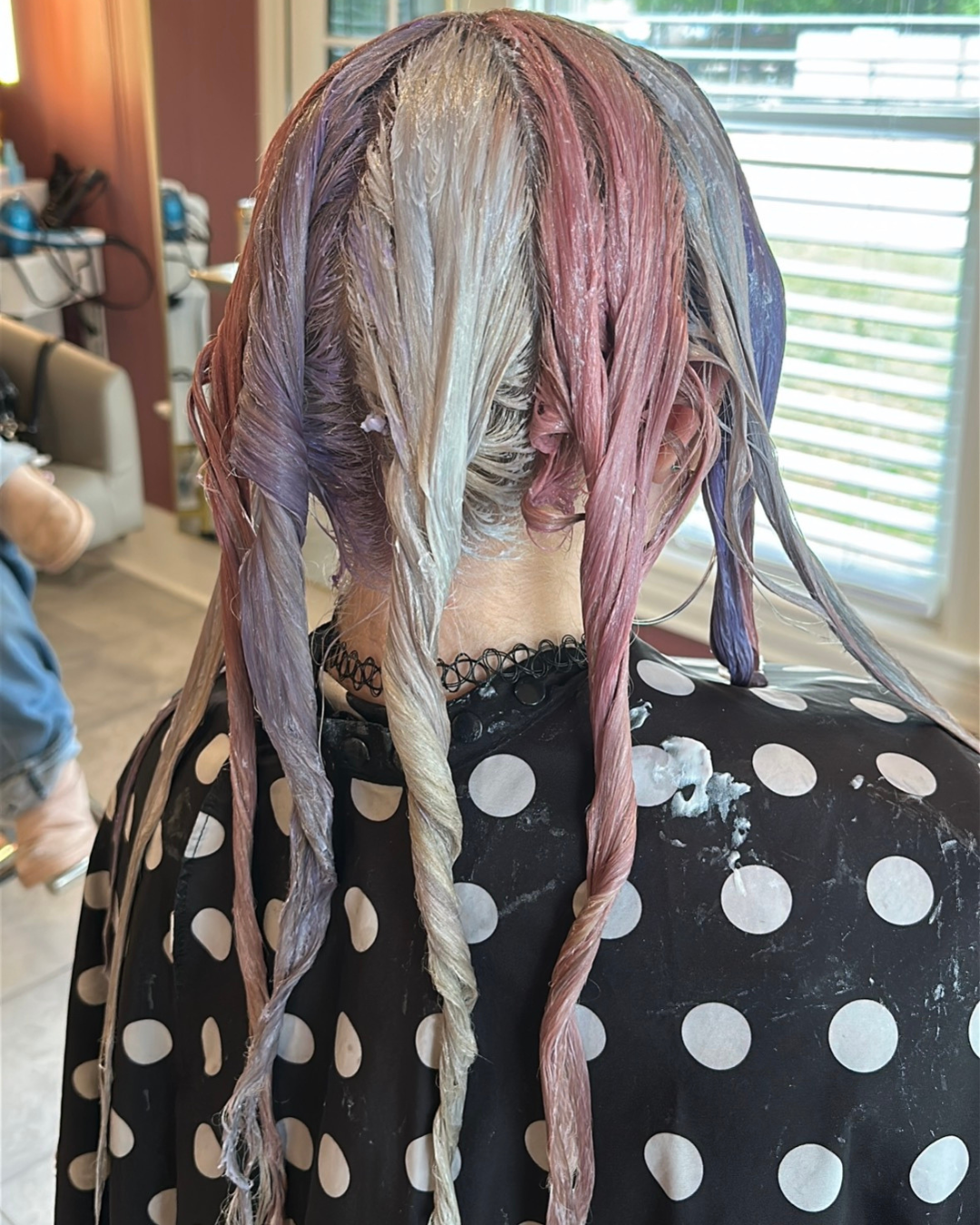
Pulp Riot's anti-overworking formula helps minimize color bleed during application, and Ashlyn pairs that technology with careful saturation and sectioning to keep each panel crisp.
"I always use like colors, so if the colors bleed while rinsing out, everything will complement each other and not ruin the canvas completely,” Ashlyn explains. “Avoiding oversaturation is just as important as avoiding undersaturation. If you saturate too much, the color will bleed more when rinsing them out."
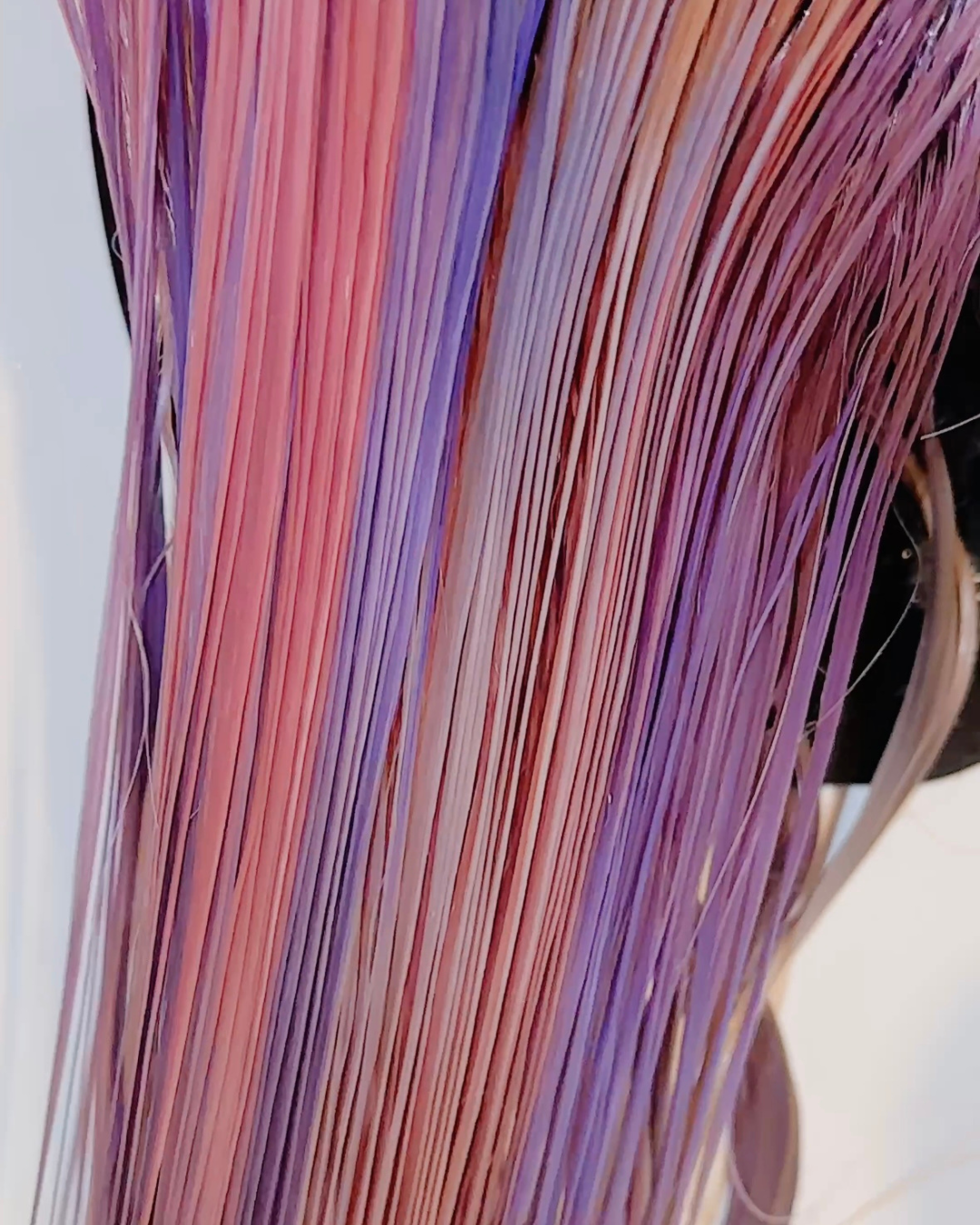
6. Allow the color to process, then rinse thoroughly.
For the finished look, Ashlyn opted for soft volume and brushed-out movement to showcase the contrast between the silver, rose and lilac panels. Press play to see the final result come to life:
View this post on Instagram
This content is sponsored.