CELEBRITY
The New "Rachel": Allie's Haircut in Off Campus Has Gone Viral. Here's How Her Hairstylist Actually Cuts It.
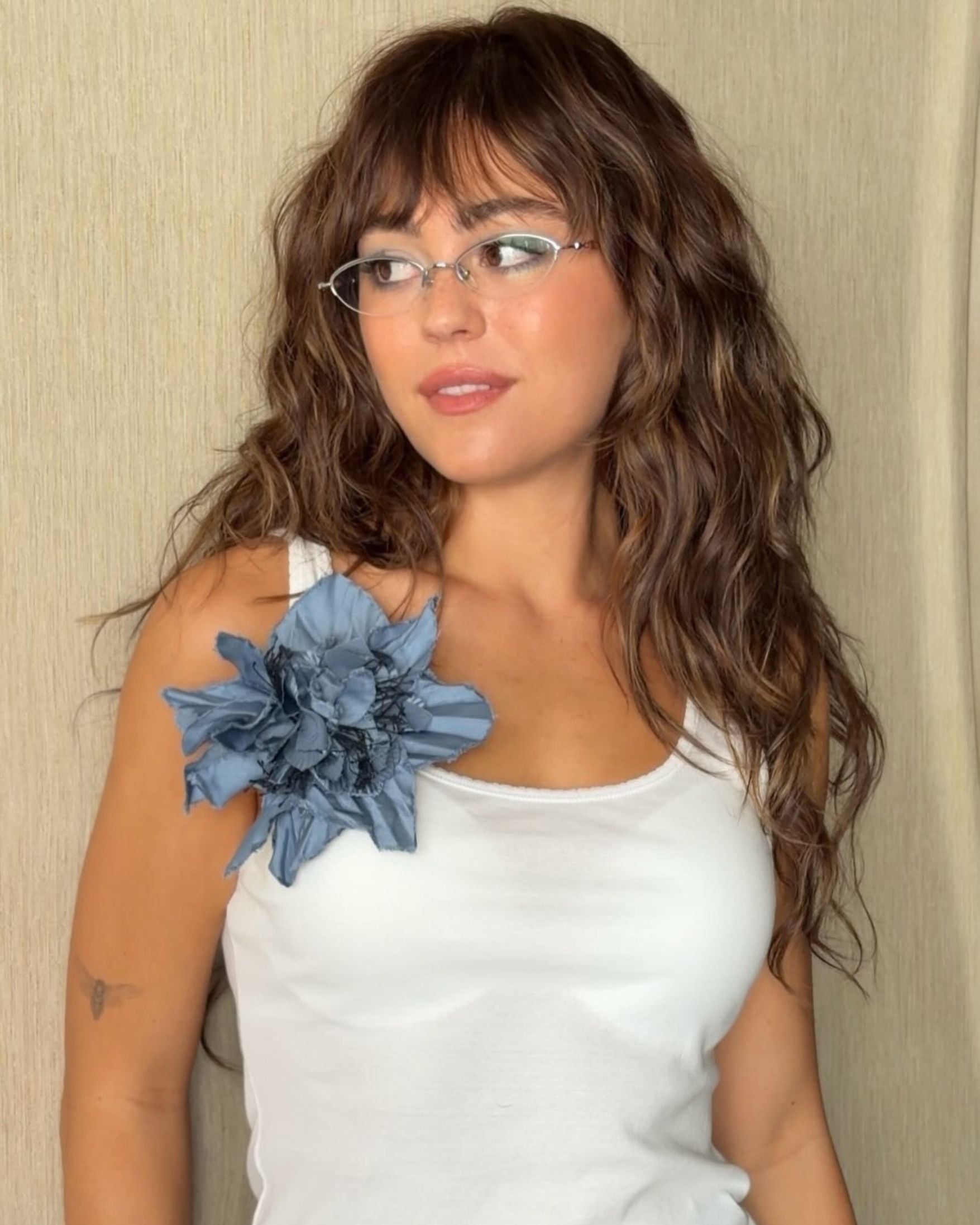
Everyone's talking about "The Allie" haircut. Since Amazon Prime's Off Campus premiered, Allie Hayes' heavily layered shag, worn by actress Mika Abdalla, has become one of the internet's biggest hair trends, with clients already bringing screenshots into salons asking for the look.
While many fans are comparing it to this generation's "Rachel," Marisa Mitchell (@marisacuts), Mika's longtime hairstylist and the LA-based dry cutting specialist behind the look, says hairstylists shouldn't think of it as a brand-new haircut at all.
"I actually would describe this to stylists as a traditional shag," Marisa says. "Not the delicate, softer shag that's more modern and cool right now, but a really heavy shag."
We caught up with Marisa to break down the haircut architecture, consultation strategy and technical decisions behind TV's most talked-about cut. Plus, exactly what hairstylists should know before recreating it behind the chair.
View this post on Instagram
A post shared by MARISA MITCHELL ✂️ (@marisacuts)
"The Allie" Is A Traditional Shag, Built With Intention
Rather than reinventing the shag, she leaned into a heavier, more dramatic version of the classic shape, one that reflected Allie’s carefree personality while maintaining the integrity of a traditional shag.
Having worked with Mika for years, Marisa wasn't starting from scratch. "Mika has always come in with a plan," she says." After she explained Allie's character, her idea for the cut made perfect sense. “We'd always done some version of a shag, but this would be the most drastic. Shorter layers, especially through the crown, and a heavier bang. Something that plays up the free-spirited nature of Allie."
Although today's modern shag often leans softer and more blended, Marisa intentionally built this haircut with stronger weight placement through the top, creating a shape that feels effortless without sacrificing structure.
Key Elements Of "The Allie":
Short, heavily layered crown to create lift and movement
Dense, full fringe instead of a soft, wispy bang
Heavy layering concentrated through the top of the haircut
Front corners that are almost cut off to frame the face
A strong perimeter that maintains fullness despite all of the internal texture
"The layers and bangs on the top are pretty heavy," she says. "It's definitely a shag."
[caption id="attachment_854054" align="aligncenter" width="819"] Photo Credit: Instagram via @bykileyfitz | Hair Styled By: @bykileyfitz[/caption]
Before You Cut, Decide If The Hair Is Right For The Shape
According to Marisa, loose waves through coily curls are ideal because those textures naturally create the separation, movement and volume that define the haircut. Clients with straighter or finer hair can absolutely wear the shape, but they should understand they'll likely need significantly more styling to recreate what they're seeing on screen.
Rather than promising an exact replica, Marisa recommends customizing the haircut around each client's texture, density and lifestyle. The customization would really depend on the client's preferences and hair type.
[btc-insert-slideshow ids="854056 854057"]
Consultation Comes Before The Haircut
For Marisa, recreating "The Allie" starts well before the first section is cut. Understanding how a client actually wears their hair every day is just as important as understanding the inspiration photo they're holding.
[caption id="attachment_854053" align="aligncenter" width="819"] Photo Credit: Instagram via Mika's Colorist @itsmadisonalexis | Haircut By: @marisacuts[/caption]
One of the first things she asks clients to do is come into the salon wearing their hair the way they normally wear it, and finds out when they last washed their hair. "If it's day one clean, I know it's probably a little fluffier than usual," she says. "If it's day three or four curls, it could coil up a lot more when it's clean. I like to get specific about this."
That information helps her understand how much the curl pattern has stretched and what she can realistically expect once the hair is freshly washed and diffused.
She also spends time discussing styling habits before deciding how aggressive she can be with the haircut. "I want to know how high or low maintenance they are with their hair," Marisa says. "And I want to know what I need to teach them throughout the cut so they can recreate it at home."
Consultation Checklist
Before picking up your scissors, Marisa recommends covering these points:
Ask clients to arrive wearing their hair the way they wear it most often
Find out what day of their wash cycle they're on
Ask what products they currently use
Understand how much styling they do at home and how much maintenance they're comfortable committing to
Tailor your education around what they'll need to recreate the haircut themselves
The fringe deserves its own consultation as well. Rather than assuming every client wants Allie's heavy bangs, Marisa first asks:
Have you had bangs before?
Do you own a blow dryer?
Are you willing to spend about five minutes styling them every day?
"If they're new to bangs, I would consider a lighter or wispier look," she says. "If they want to go heavy like Allie's cut, I really make sure they understand how to style at home and have the products they need."
Why Marisa Doesn't Finish The Haircut Before Styling
One of the biggest technical takeaways behind "The Allie" is Marisa's workflow. Instead of completing the haircut entirely on wet hair, she intentionally leaves part of the service unfinished until after the hair has been washed and diffused.
"I do about 75% of the cut and then wash and diffuse. That last 25% is the magic."
Her tool of choice is almost always scissors, using slide cutting and internal notching to selectively remove weight higher on the head while preserving density where the haircut needs it most.
"My go-to tools are scissors over anything else," she says. "I do a lot of slide cutting and notching internally to remove weight higher up on the head." Just as importantly, she's constantly protecting the perimeter. "I'm being very careful about the perimeter of the haircut, as to not leave things looking see-through or too wispy."
Once the curls are completely dry, the haircut reveals information she simply can't see beforehand. "Cutting curls or waves is about creating negative space and dimension," she explains. "I want to see how the layers and curls bounce off one another."
Instead of following predetermined sections at this point, Marisa shifts into a completely intuitive approach, studying how each curl naturally falls before making the final refinements. "This part is all freestyle, and my favorite thing about cutting curly hair."
[caption id="attachment_854058" align="aligncenter" width="819"] Photo Credit: Instagram via @storyofmailife | Hair Styled By: @kikihaircutter[/caption]
The Technical Details That Make Or Break This Haircut
Marisa says one of the easiest mistakes stylists make with heavily layered cuts is becoming so focused on texture that they lose the haircut's balance. That's why she continually checks the perimeter throughout the service, especially after diffusing.
"The strong perimeter is very important," she says. "You don't want it looking super top heavy, with strings on the bottom." Her advice is simple: "Check your perimeter over and over again if you need to." She also reminds stylists not to underestimate shrinkage.
If that uncertainty makes you nervous, she recommends cutting curly clients dry so there are no surprises once the haircut is finished.
[btc-insert-slideshow ids="854068 854069"]
We asked Marisa what she'd teach a room full of hairstylists if "The Allie" was her next onstage class. Her answer came down to three foundational techniques:
Treat diffusing as part of the haircut, not simply the styling process.
Detail the haircut after the curls are completely dry so you can evaluate movement, weight distribution and how the curls naturally interact with one another.
Pull all of the hair into a ponytail and study what naturally falls out. Evaluate the bangs, face framing and overall silhouette before making your final customizations so the haircut complements the individual client, not just the inspiration photo.
Whether clients call it "The Allie" or the next "Rachel," Marisa sees it as something much simpler: a thoughtfully executed shag customized to the person sitting in the chair. For hairstylists, that's the real takeaway. The haircut may bring clients through the door, but it's the consultation, technical execution and thoughtful detailing that turn a viral trend into a wearable cut clients can actually live with.




 BTC Challenge
73 answered
BTC Challenge
73 answered

