What Men's Haircuts to Avoid For Fine and Thinning Hair (And What To Do Instead)
The Cuts and Techniques That Collapse Fine and Thinning Hair (and How To Build Fullness)
Fine and thinning hair exposes every cutting mistake. Remove weight in the wrong place, and the shape collapses instantly, separating at the ends and losing any illusion of fullness. With less density or smaller strand diameter to work with, every section, layer and removal choice becomes more visible in the finished shape.
At the same time, clients arenโt looking for one standard solution. They want haircuts โtailored to their head shape and hair type, rather than one-size-fits-all,โ adds Ivan Ross (@the_veganbarber), Wahlยฎ Professional Educator.
Hereโs where fine and thinning haircuts go wrong and how to build structure back into the shape.
What Cuts and Techniques Should You Avoid for Fine Hair and Thinning Hair?
Donโt: Remove weight at the perimeter
Haircuts that rely on heavy layering or broken, airy ends tend to collapse on fine and thinning hair.
Avoid these haircut types:
- Heavy shag cuts: remove too much weight through the ends, causing separation
- Over-layered wolf cuts: too much internal removal without density to support it
- Razor-heavy cuts: thin out the perimeter where fullness is needed most
- Over-texturized crops: break up the outline instead of reinforcing it
Anything that removes perimeter weight can make fine hair separate into stringy pieces rather than hold a cohesive shape. Dense hair is often able to โreplaceโ removed weight with natural fullness, but fine or thinning hair typically lacks the density needed to support aggressive texturizing.
Avoid these techniques:
- Razors on the perimeter open the cuticle and thins the ends where weight needs to be retained
- Deep point cutting removes too much perimeter weight, collapsing the outline
- Do: Choose structured shapes that hold weight
Instead of removing weight, opt for haircuts that build a strong outline and controlled shape. The goal is to create density at the perimeter and support from within.
Best haircut shapes for fine and thinning hair:
- Textured crop: compact shape with a forward fringe to redistribute weight
- Buzz cut: removes contrast issues and creates a uniform, scalp-flattering finish
- Comb over (with a fade): uses directional styling to conceal thinning at the crown
- Textured quiff (with internal support): builds lift through structure, not layering
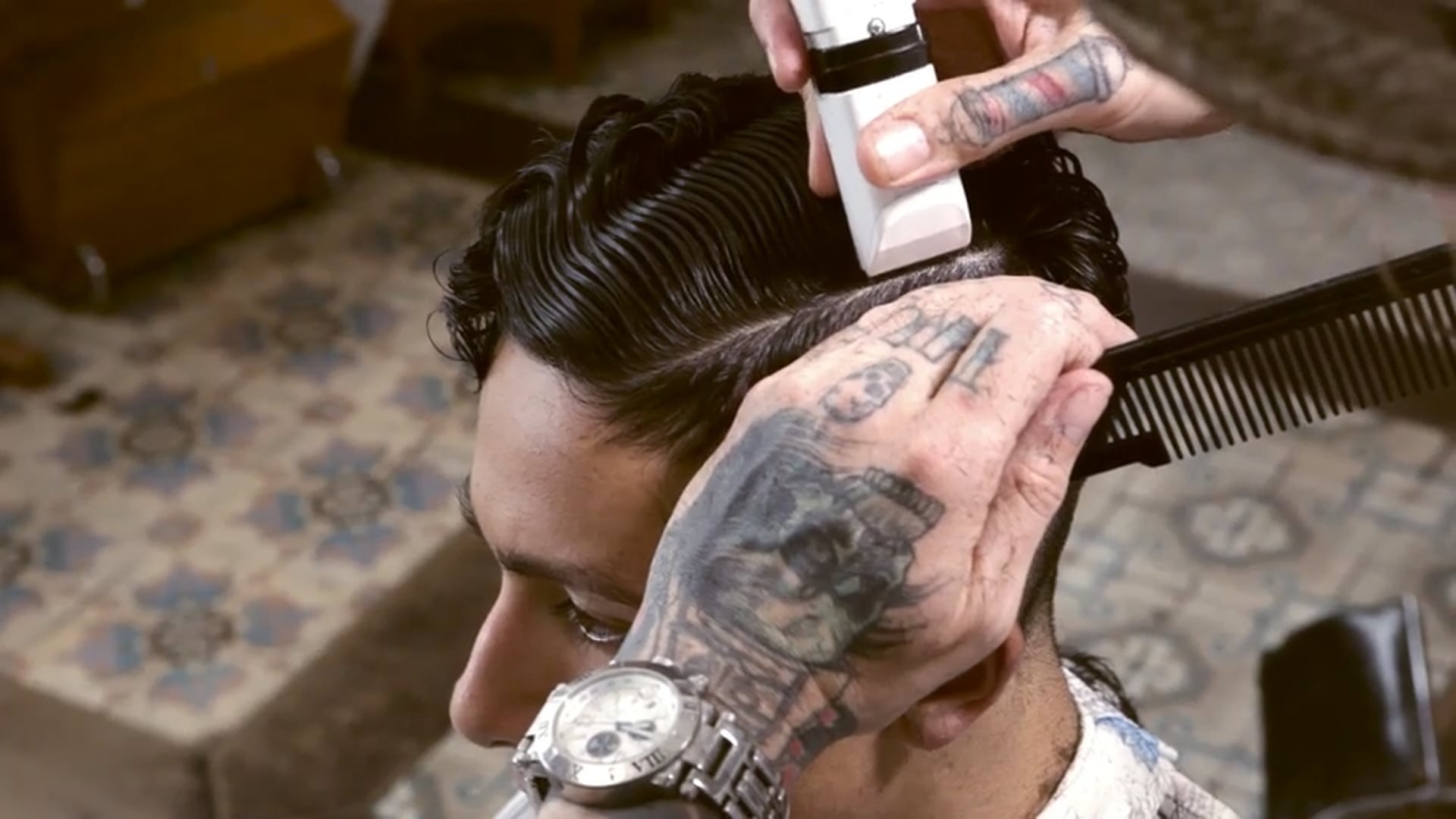
Click through to see how these cuts transform fine and thinning hair:
How To Build Fullness and Balance
Donโt: Build fullness by removing more hair
Fine and thinning hair typically wonโt appear fuller from aggressive layering or excessive weight removal. In many cases, taking too much hair away causes the shape to collapse, making sparse areas more noticeable instead of creating volume.
Do: Build structure from within
Use this pro cheat sheet:
- Blunt cutting builds a strong perimeter for crops and comb-overs, so the hair looks instantly thicker
- Surface point cutting only adds separation on top (like in quiffs and crops) without breaking the outline
- Micro-graduation builds internal volume so the shape lifts without removing length; for burst fades, it helps create lift and a rounded shape so the fade wraps clean
- Interior support layers add hidden structure so styles like comb-overs and quiffs hold their shape
- Beveling the perimeter reinforces weight at the ends while allowing you to subtly shift and reinforce length toward the frontโhelping disguise receding hairlines
- Fades and tapers reduce contrast through the sides and nape, making longer top sections (like comb-overs and quiffs) appear fuller
Do: Reduce contrastโnot structure
For thinning hair specifically, fades and skin fades are one of the most effective toolsโnot to remove weight on top, but to reduce contrast around it. Shortening the sides helps rebalance the silhouette and draw attention away from a thinning crown without disrupting the structure where itโs needed most.
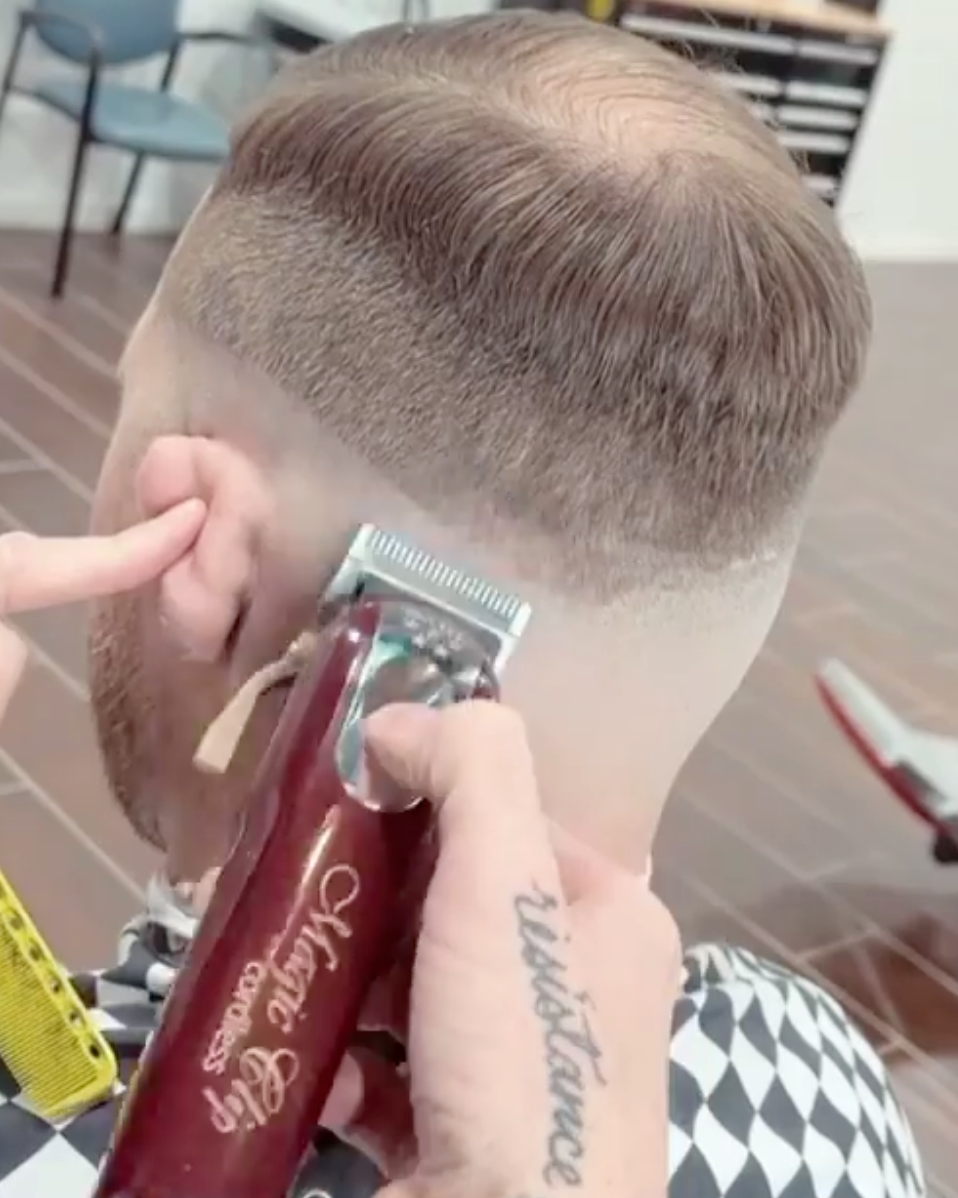
Michael DeJesus (@madd_cutts), menโs hair expert, gave his clientโwith thinning in the crown and cornersโa bald fade to make the top look fuller. His goal? To help his clients look and feel their best. Michael used the BaBylissPROยฎ GoldFX+ Trimmerย and the Wahlยฎ Professional Magic Clip for the look. Click through the images for his step-by-step:
How To Make Thinning Hair at the Crown Look Fuller
Donโt: Keep excess weight around the crown
Leaving too much length around thinning areas can actually make hair loss more noticeable by increasing contrast and drawing attention to the crown.
Do: Use fades to rebalance the shape
Instead of trying to โcoverโ thinning, reduce contrast around it. Shortening the sidesโespecially with higher or skin fadesโhelps shift the eye away from the crown and creates a more balanced silhouette.
Shayne Hawthorne (@shayne.doeshair), professional barber and global educator, explains on his Instagram: โI know the natural reaction is to keep more hair when youโre balding, but that actually makes the problem worse,โ he explains.ย
By tightening the sides, he creates an optical illusion that draws attention away from the thinning area rather than toward it. Press play to watch him in action:
Here, Joel Morris (@j.diced), pro barber, gives his clients a buzz cut with a fade to hide their balding at the crown:

Want to see what’s trending? See what men are actually asking their hairdressers for in 2026.